Advancing Digital Delivery at Scale: How Straits Construction Builds Connected, Predictable Delivery with Autodesk Forma
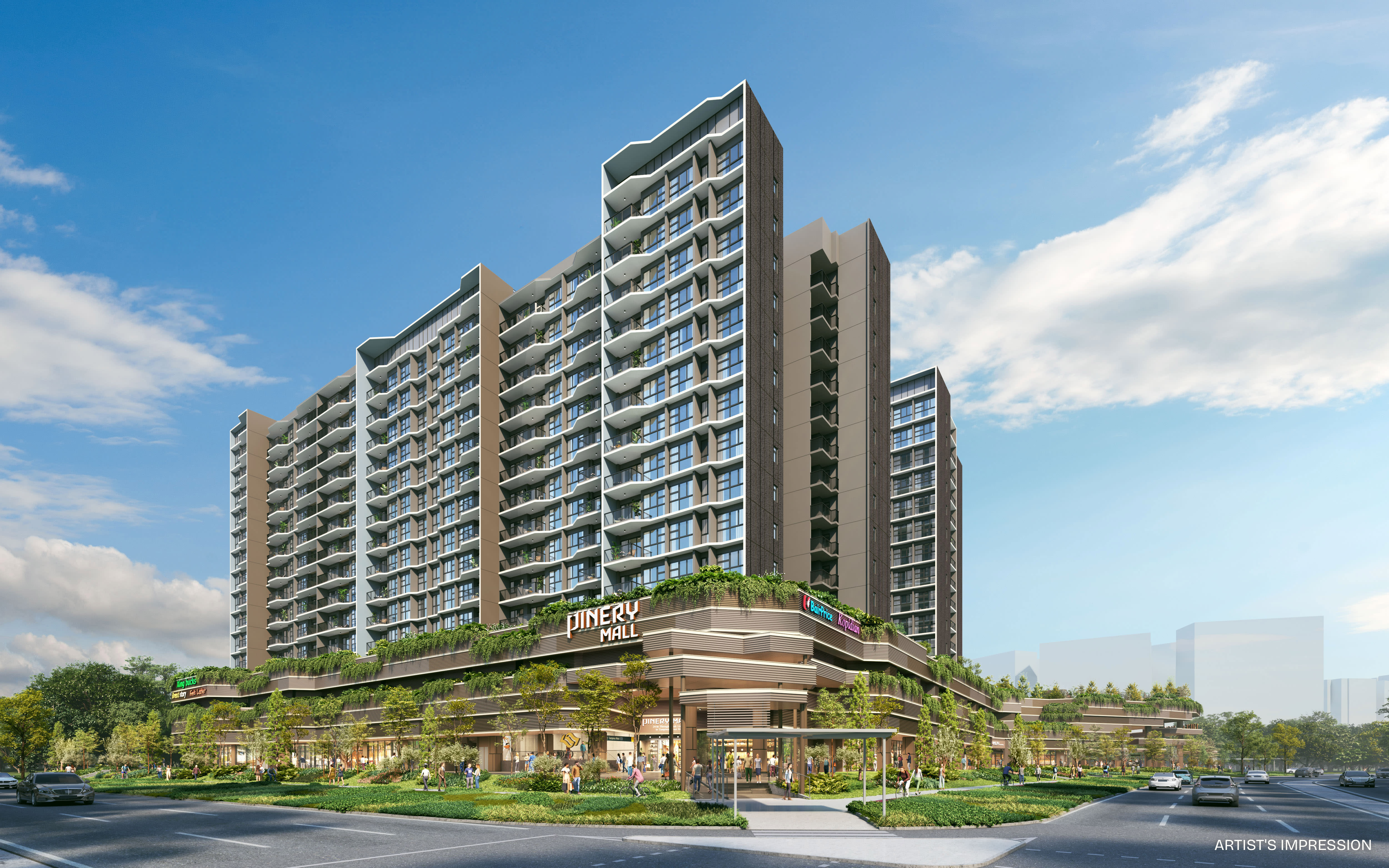
Since 1969, Straits Construction has helped shape Singapore's built environment as one of the country's established main contractors. At Pinery Residences, a complex mixed-use development in Tampines West, Straits is using Autodesk Forma to bring Lean planning, DfMA and precast readiness, and daily project controls into one connected environment. Digital delivery, BIM and prefabrication are established capabilities within the business, reinforced by its precast and prefabrication subsidiary, Greyform.
A complex build with no room for delays
Pinery Residences is a massive undertaking: 588 homes in six residential towers above a retail podium, preschool, community plaza and underground link to Tampines West MRT station. Jointly developed by Hoi Hup Realty and Sunway MCL, it brings residential, commercial, transport and community spaces together on one site, along with the DfMA and precast delivery Singapore construction increasingly depends on.
On a project with this level of complexity, the cost of late or incomplete information is substantial. "A build like this has residential, retail, transport and community elements all interfacing at once, with information constantly moving between stakeholders," says Edmund Leong, Director and Head of Department for Innovation and Technology Adoption, BIM/ICT, at Straits Construction. "When that information is scattered, people get lost and delays start before you’ve even noticed."
Delayed clarifications, unmanaged revisions or approvals buried in an inbox can ripple across designers, subcontractors, suppliers and site teams. That coordination once relied on email, spreadsheets and, for precast logistics, a paper wall chart pinned up in the site office and colored in by hand as elements moved. It was slow to update and prone to error.
Making Forma the first place people look
Autodesk Forma, which Straits began adopting in late 2020 when it was known as Autodesk Construction Cloud, became the digital backbone for the project. Forma Data Management centralizes drawings, models and documents, while Forma Build turns that information into the daily workflows the team runs on.
The shift in behavior is measurable. By July 2026, Pinery Residences was Straits' most active project on the platform by users, with 108 active users and 15 of 27 tracked workflows in use. Active users had increased by 46 since December 2025, with strong participation across document control, submittals, correspondence and design review.
"The biggest movement on this project is that Forma has become the first place people look," says Edmund. "It is no longer a case of searching for an Excel file or a document somewhere on the server. When someone needs information, they go to Forma and they know they’ll find it there."
On track and on time with less waste
That connected environment underpins the firm's Lean construction approach, which optimizes scheduling and resources so teams can focus on what is happening now and move forward with less waste. Forma lets stakeholders update progress in one shared space and see results almost immediately, rather than waiting on circulated updates.
For Edmund, the discipline is already showing. "This project is still in an early phase, but we are on track against what we planned, without the overruns and delays we might have seen before. Information now reaches the right stakeholders faster, clearer and more consistently, so any problems surface early."
Edmund sums it up in the language of Lean: "On track, on time and less waste. Less waste means less rework, and less rework means less time and cost."
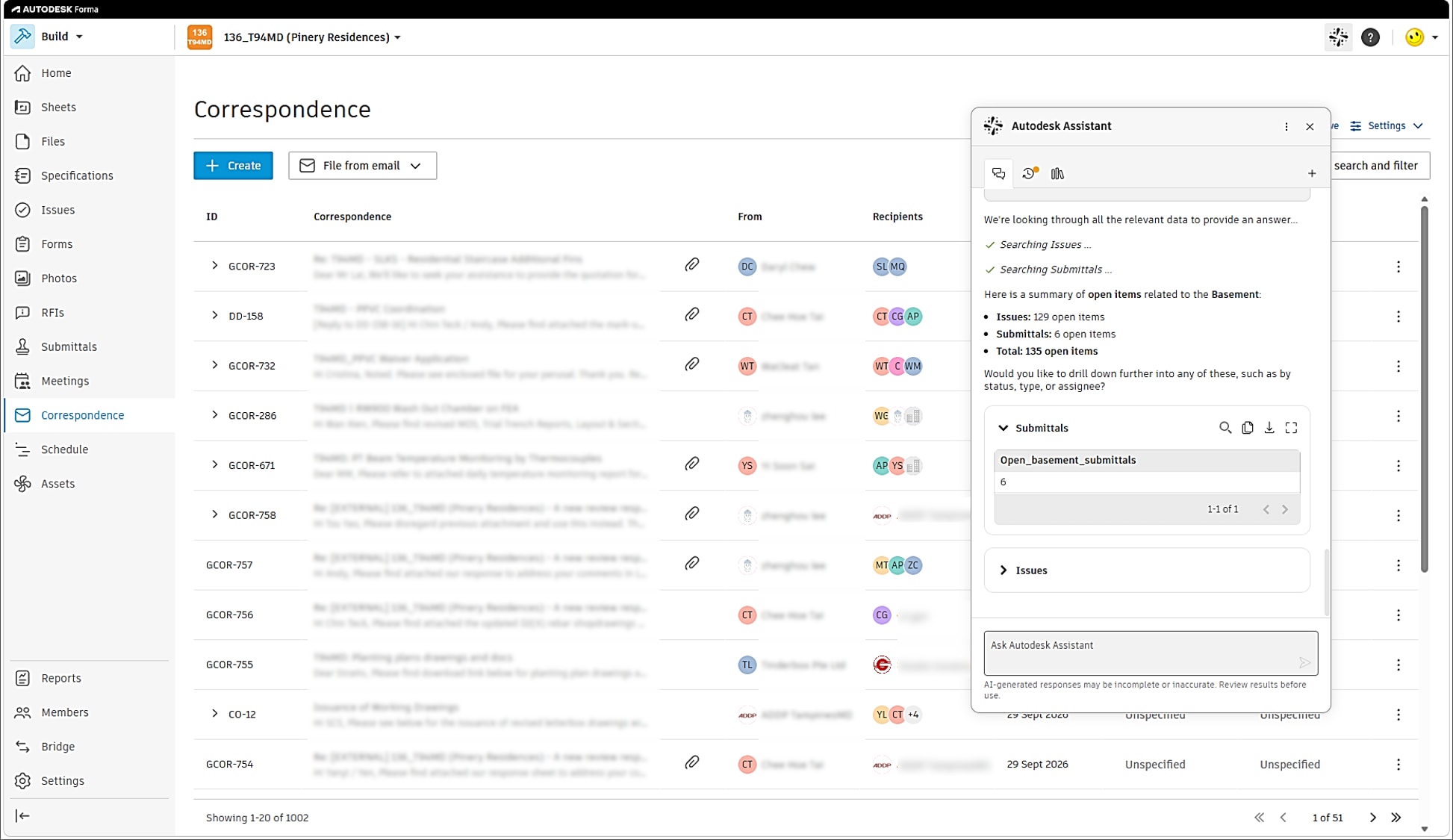
Project correspondence in Forma gives teams a shared, traceable workflow for project communications and close-out.
Retiring the wall chart
Nowhere is the change more tangible than in precast logistics. Straits uploads a 3D model of the Pinery Residences building to Forma, and as each prefabricated pod moves from Precaster’s factory, onto site and into position, workers scan a QR code to update its status in the mobile app. The status changes color in real time, so managers can open a single view and see exactly what has been delivered and installed.
"We used to track prefabrication on a wall chart, a printed drawing colored in by hand and repinned every time something changed," Edmund says. "Now it updates itself on the model as elements move, giving us live information."
Because the tracking spans Straits, its subsidiary and delivery partners, Forma provides a practical shared environment for the broader team. The same connected approach extends to management reporting, with data from third-party site and safety tools brought into Forma dashboards that give leadership an up-to-date view.
Change management championed from within
Adoption is what makes changes like this stick, and Straits Construction has not left it to chance. New subcontractors go through a structured induction, and the digital team monitors early activity to flag lagging responses. Around 80 to 90% of the extended team, consultants and subcontractors have now been trained and brought onto Forma.
The firm has also invested in a sustained upskilling program. Every quarter, the digital team reserves a day for an enterprise-wide seminar and hands-on workshop, with the first session drawing around 80 participants. Autodesk supports with advisory and enablement, but the change is owned by Straits, which is what makes it sustainable.
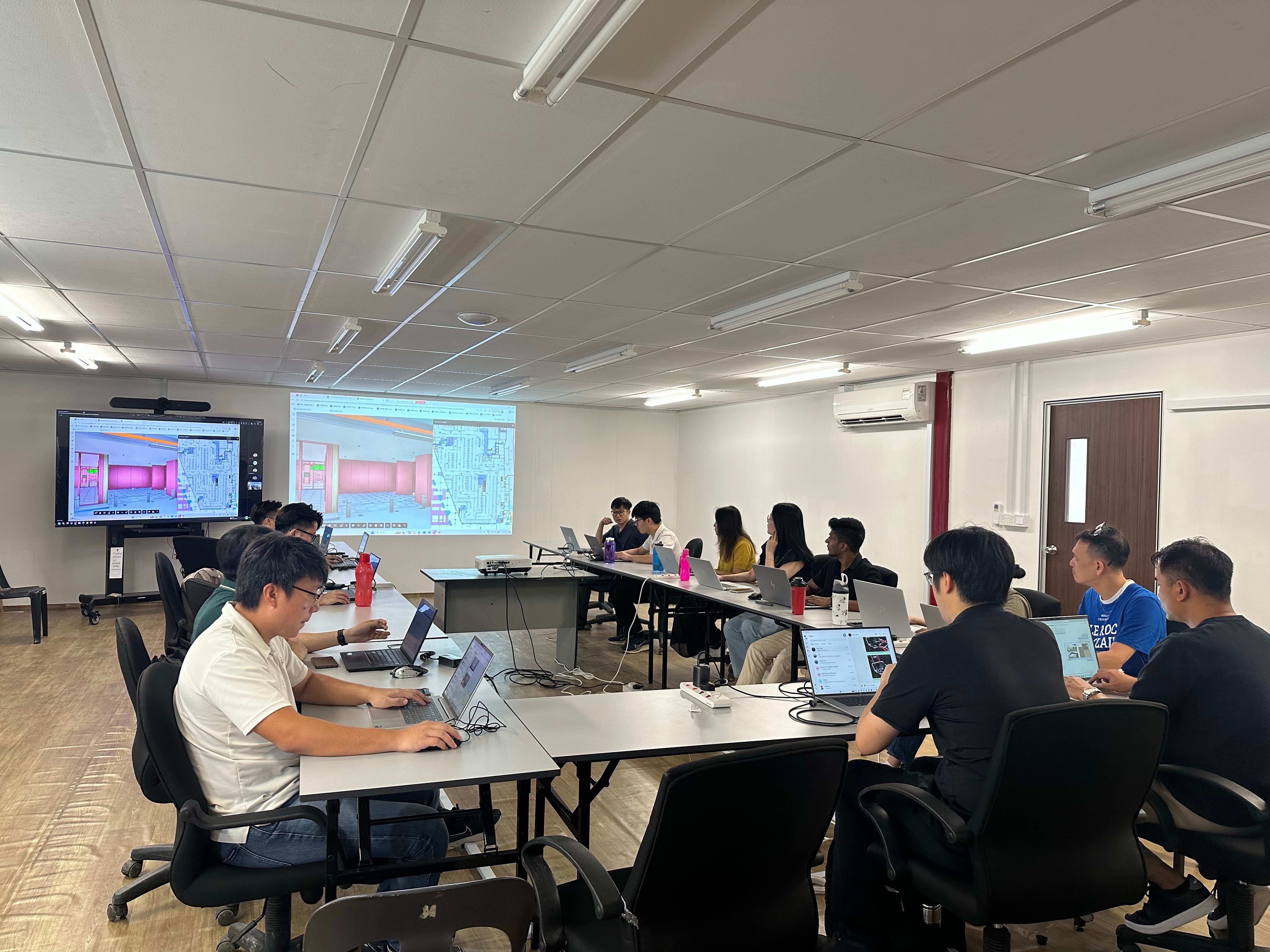
Straits' structured enablement combines enterprise seminars with hands-on workshops to make digital ways of working repeatable.
"This is the first project where we changed the way we onboard people onto Forma," Edmund says. "We hand-hold them, guide them and make sure everyone works the same way. Instructions are clearly described, and once correspondence is closed, we know with certainty that it is done when, previously, that kind of thing just floated in the air."
Scaling connected delivery across the portfolio
Pinery Residences sits within a much broader digital-delivery pattern at Straits Construction. By July 2026, 473 people were active in Autodesk Forma across multiple active projects, up 18% year on year, reflecting the scale of day-to-day project work now moving through the connected environment. The breadth is as important as the headline numbers. Document control, project correspondence and submittals are embedded across all of Straits' busiest projects. That spread shows that connected delivery is not concentrated in a single flagship project; common workflows are taking hold across the portfolio.
For Straits, scale is not simply more users. It is the ability to carry consistent information, approval and communication workflows from project to project - creating a stronger foundation for standardization, governance and continuous improvement.
Pinery Residences: breadth and depth in one live project
Within that portfolio, Pinery Residences is a strong proof point for how deeply connected delivery can run on a live project. In July 2026, it led Straits by active users, with 108 people active and 15 of 27 tracked workflows in use - the widest workflow footprint among the eight busiest projects. Active users had increased by 46 since December 2025.
PINERY RESIDENCES | DELIVERY FOOTPRINT | JULY-AUGUST 2026
|
108 |
15 |
ACTIVE USERS BY CORE WORKFLOW | JULY 2026
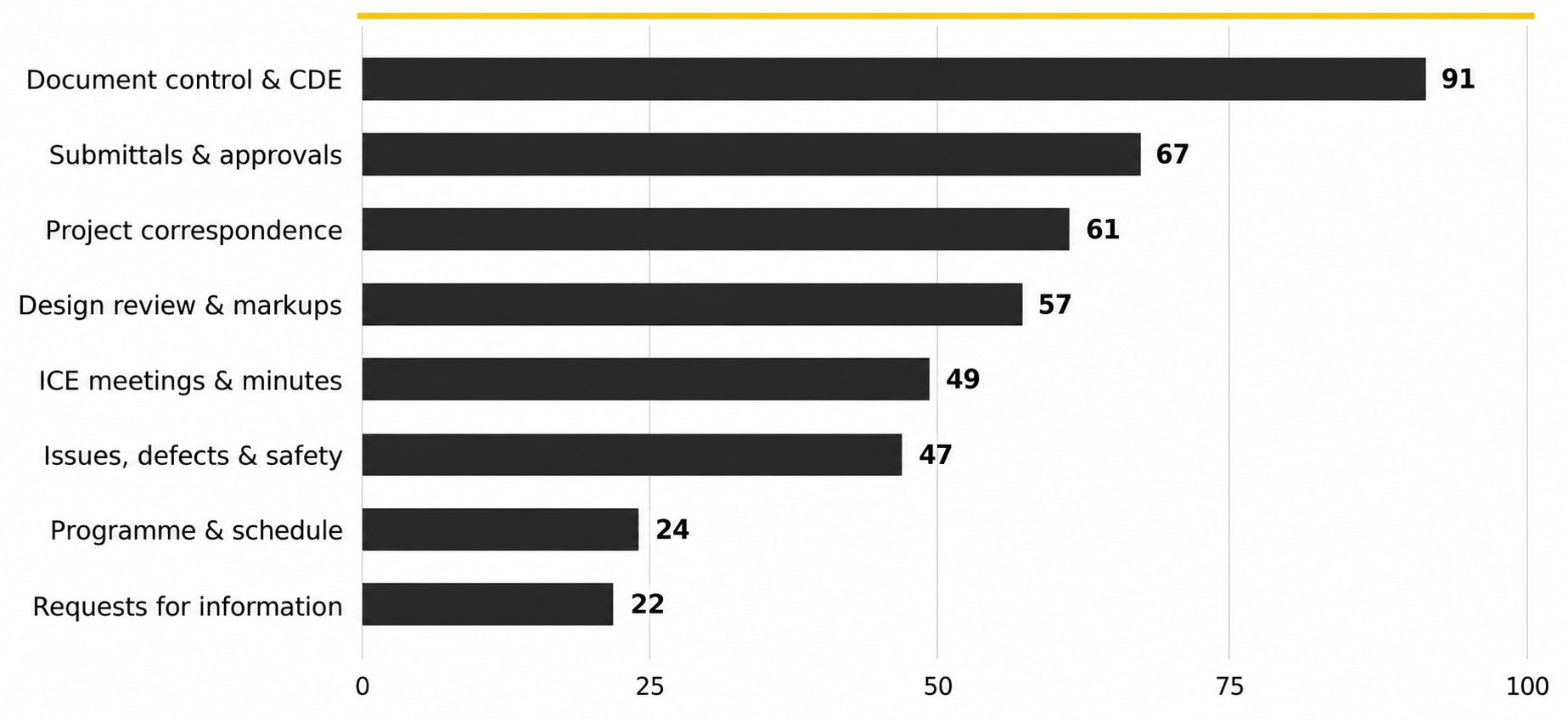
Selected workflow use shows a project environment doing far more than storing information. Document control reaches 91 users, submittals 67, correspondence 61 and markups 57, with meetings, issues and scheduling also part of the operating rhythm. The mix spans design coordination, approvals, communication and project controls, making Pinery a useful reference for how Straits can repeat connected delivery across future projects.
With those behaviors established, Straits can introduce new capabilities through workflows teams already understand - rather than asking people to adopt a separate technology layer. That is the context for the next step: AI-assisted ways of working.
AI as the next layer of connected delivery
That same change-management discipline is creating a pathway for AI-enabled ways of working. Across Straits, engagement with Autodesk's built-in assistant grew from 8 users to 415 over the last 12 months. The firm is exploring how AI can draw more insight from the project information already centralized in Forma and lighten routine work. The focus is not on AI as a standalone experiment, but on introducing new capabilities through workflows teams already understand and supporting people as those workflows evolve.
For Pinery Residences, the benefit is practical rather than abstract. Forma capabilities such as AI-assisted mobile RFI creation can turn spoken input into structured RFI fields, reducing manual entry for site teams, while Autodesk AI-powered room and area detection can help administrators set up location structures without drawing every polygon by hand. Combined with Straits' structured induction, recurring workshops and hands-on enablement, these capabilities point to a repeatable model for technology change: remove friction from familiar tasks, guide teams through the new way of working, and scale what proves useful.
Building the foundation for what comes next
Pinery Residences is still early in its lifecycle, with completion expected close to 2030, but Straits Construction is already building on the foundation. The connected data, common workflows and adoption practices being established here are part of a wider pattern: document control, correspondence and submittals are embedded across all eight of Straits' busiest projects. Together, they give the firm a repeatable base for future projects and the next generation of digital delivery.
AI ADOPTION AT SCALE | JULY 2026
|
415 |
8 |
108 |
For Edmund, the ambition stays grounded in the outcomes that matter. "Forma gives us a strong base to keep improving," he says. "If it helps us stay on track, on time and reduce waste, that is a major win. This is about delivering, with confidence, the environments where people live and thrive."