How China Harbour Engineering Company scales construction intelligence with Autodesk Forma
From site data to boardroom decisions
China Harbour Engineering Company (CHEC) is one of the world’s leading infrastructure and construction firms, delivering large-scale transport, marine, and building projects in Asia-Pacific and globally. Known for its engineering capability in executing complex developments, CHEC operates in environments where scale, coordination, and consistency are non-negotiable.
As the business expands into new markets, the need for a scalable approach to project delivery becomes increasingly critical; that need is what led CHEC to Autodesk Forma. Rather than treating digital tools as standalone solutions, the firm is using Autodesk Forma as a platform to standardise workflows, improve visibility and support decision-making from the construction site all the way to senior management.
Making real-time visibility the norm
Before adopting Autodesk Forma, CHEC’s project data existed across multiple systems, with site-level updates often consolidated manually into reports for leadership. The process created delays and limited visibility for senior management overseeing multiple projects across many countries and time zones.
“The challenge was not collecting data, it was making it visible and usable,” explains Yan Naing Bo, Corporate BIM Manager at CHEC. “Management had to wait for updates instead of seeing the project status directly and in a format that is actionable for them.”
This created a disconnect between site activity and leadership decision-making, particularly on large and complex developments where speed and clarity are critical.
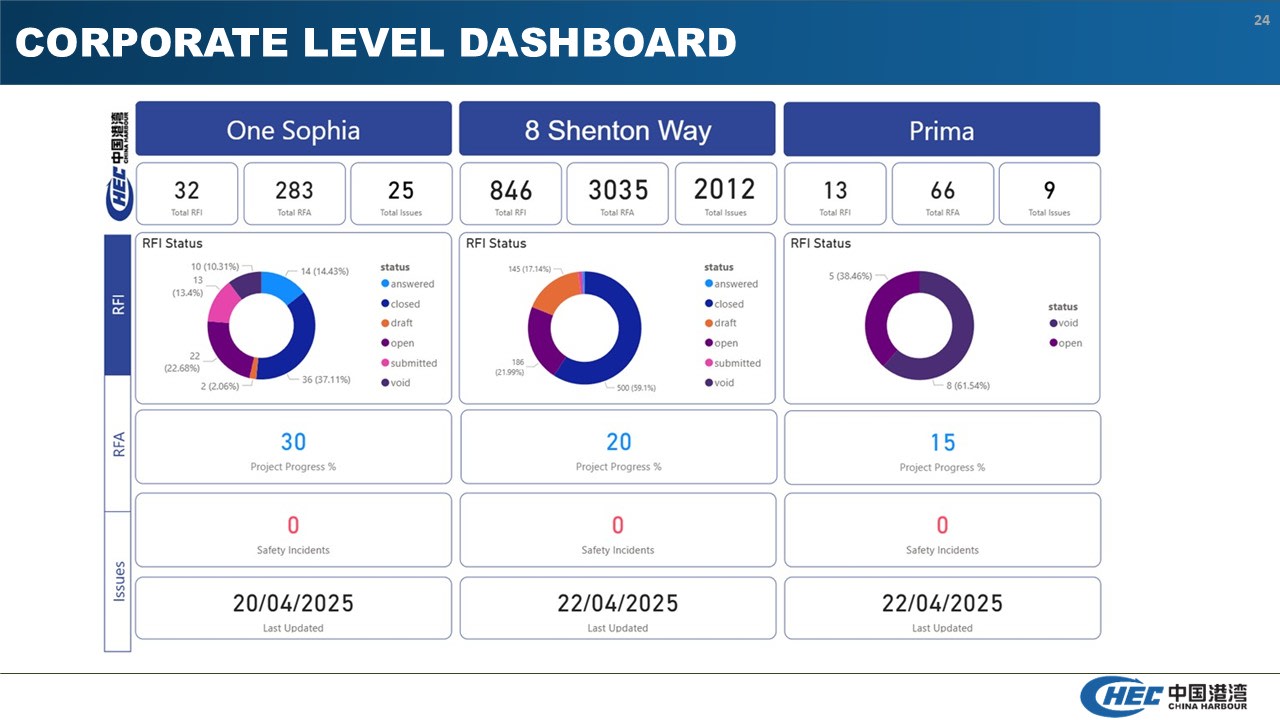
Autodesk Forma changed that by introducing dashboards and business intelligence tools allowing project data to surface in real time. Instead of relying on periodic reports, CHEC’s leadership now accesses live insights across multiple sites, enabling faster, better-informed decisions contributing to the firm’s growth.
“Dashboards allow management to understand what is happening without asking the team to prepare reports or create more work - Yan explains. “That removes bottlenecks and gives our leadership greater confidence in the information they are seeing.”
Meaningful digital onboarding at scale
One of the key enablers of this shift has been CHEC’s approach to onboarding. Rather than limiting access to core teams, the company has implemented an account-based licensing model that removes cost barriers for subcontractors and partners.
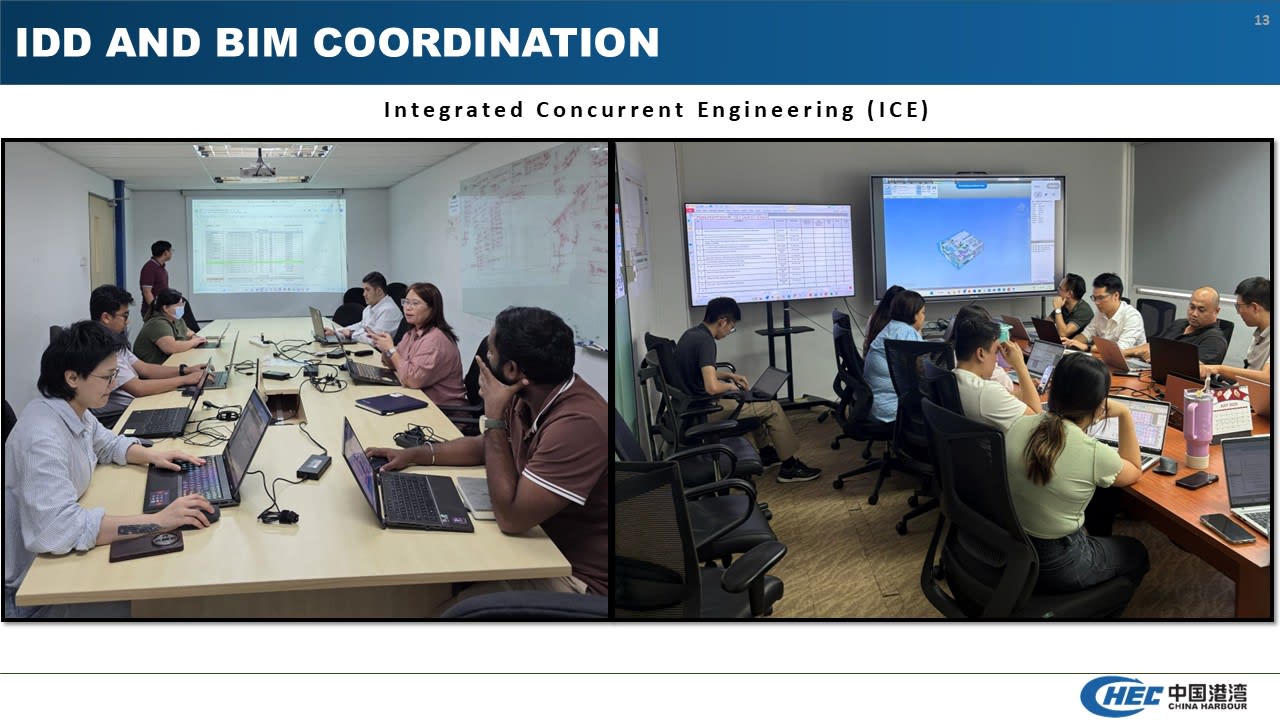
This allows consultants, subcontractors, and site teams to work within the same environment from the outset, accelerating adoption and encouraging compliance across projects.
“When we bring people into the platform early, we avoid fragmentation later,” Yan says. “Everyone is working in the same system, using the same workflows and that allows us to scale more easily.”
This approach also supports CHEC’s broader ambition to standardise delivery across its portfolio, ensuring that data is structured consistently regardless of project or geography.
Transforming site-level QA and QC workflows
While dashboards provide visibility to management, the foundation of CHEC’s digital approach is built on improvements made at construction sites, particularly in quality assurance and quality control (QA and QC).
On projects like 8 Shenton Way in Singapore, CHEC piloted the use of Autodesk Forma’s Forms module to digitise traditionally paper-based inspection workflows. These processes were time consuming, had a significant margin for error and were difficult to track when multiple stakeholders became involved.

“As a quality team, we were handling a lot of paperwork,” says Mr. Parameswaran, Quality Head on the 8 Shenton Way project. “Inspection forms had to be completed, scanned and shared. This slowed us down and increased the risk of missing information.”
With Autodesk Forma, Parameswaran explains, “CHEC 8SW Project’s Quality team pioneered a digital QA and QC workflow through an intensive iterative and deep diving process allowing multiple stakeholders to work on inspection forms concurrently on-site.” Contractors, subcontractors and inspectors can collaborate in real time, reducing delays and improving accuracy and this is “what makes the difference,” Parameswaran explains, “because everyone involved can update at the same time. That removes waiting time and helps us close issues faster.”

The impact has been immediate and measurable. Processing time for inspection forms has reduced from up to 25 minutes to just 3 or 4 minutes. For Document Controller Musarraf Hossain, the efficiency improvement and reduction in administrative overhead have been particularly significant.
“The use of Forms under Forma Build, has eliminated the need for document scanning, which was previously a major repetitive task for me as a Document Controller. When my supervisors request information, tracing and retrieving it is now significantly easier compared to the traditional process,” says Hossain.
8 Shenton Way: a testbed for scalable delivery
CHEC’s approach has been tested on one of Singapore’s most ambitious developments, 8 Shenton Way, a high-end, mixed-use project that will be the tallest building in the country upon completion in 2028. With its scale and complexity, the project provides an ideal environment to pilot new workflows and refine digital processes before scaling them across the business.
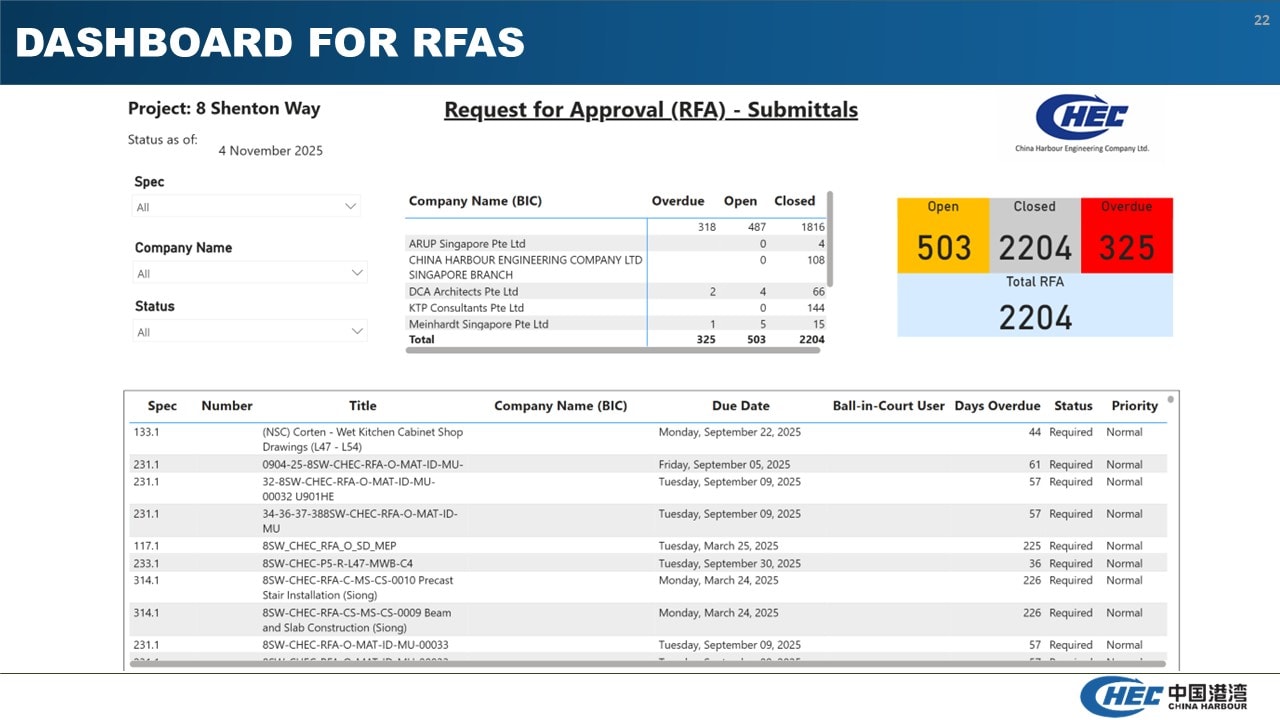
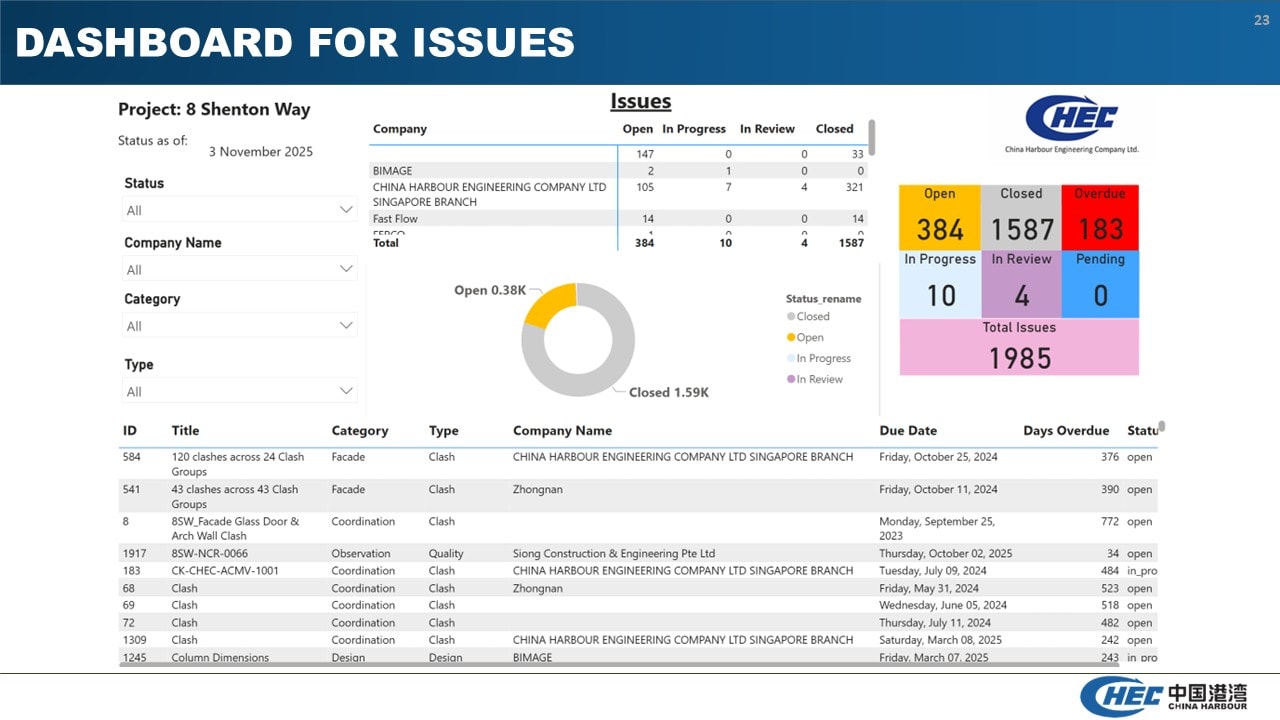
For CHEC, 8 Shenton Way is not just a landmark project, but a proving ground for how digital delivery can be implemented at scale. Autodesk Forma has supported coordination across multiple stakeholders, while enabling site-level data to flow directly into management dashboards.
“This project allows us to test digital workflows under real conditions,” Yan says. “We are not just digitising tasks, we are building a system where information flows from site to management in real time.”

From pilot to standardisation
Following the success of the pilot at 8 Shenton Way, CHEC is now working to standardise these workflows across its broader portfolio. The goal is to create a consistent, scalable approach to digital delivery, where data captured on site feeds directly into a centralised platform that supports operational execution and strategic business decisions.
“We are moving towards a standard system for all projects,” Yan says. “Once the workflows are proven, we can roll them out and ensure every project benefits.”
Importantly, for CHEC, the focus is not just on adopting technology, but on building a system that supports long-term growth and consistency. By connecting site-level workflows with management-level visibility, Autodesk Forma enables CHEC to move beyond manual processes and towards a more strategic approach to construction delivery.
“We want to make sure that our projects are not only successful individually, but consistent as a portfolio,” Yan says. “That requires a system where data is reliable, accessible and connected.”
As CHEC continues to deliver complex projects across Asia-Pacific, this approach positions the company to scale with confidence, ensuring decisions at every level are informed by real-time, trusted information.