Sunway Construction Boosts Efficiency with 45% Faster Digital Reviews via Autodesk Construction Cloud™
For more than four decades, Sunway Construction has played a central role in shaping Malaysia’s built environment. From iconic landmarks like Legoland Malaysia to critical infrastructure such as the Kuala Lumpur Convention Centre, the company’s commitment to delivering high-quality, cost-effective construction solutions is well established. As a vertically integrated construction powerhouse, Sunway’s capabilities span every phase of project delivery — from design to completion.
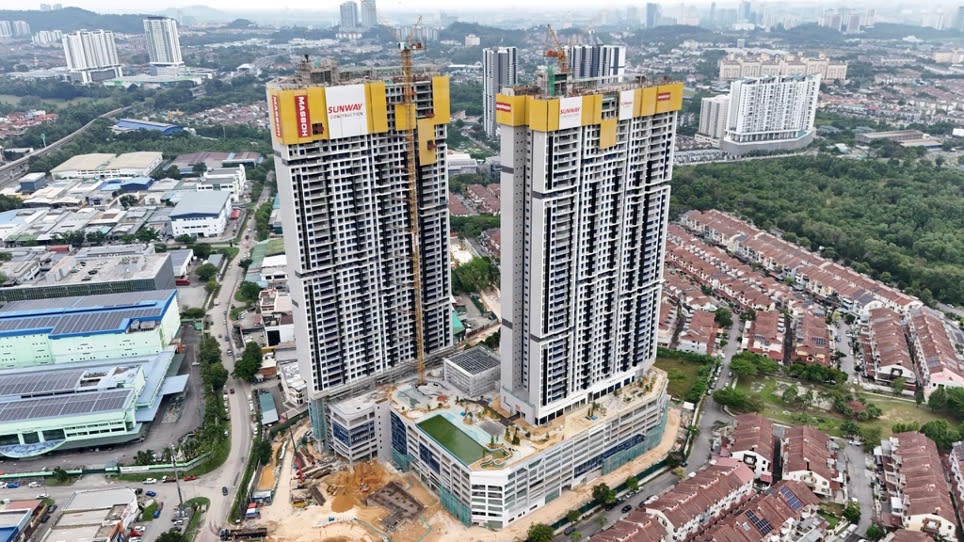
But even for an industry leader, managing the complexity of large-scale projects involving hundreds of stakeholders can present significant operational challenges. On the Flora Residences project — a multi-phase residential development that has since earned accolades across the industry — the Sunway team recognised an urgent need to digitise its construction workflows and improve collaboration across functions. That opportunity came through the adoption of Autodesk Construction Cloud™ (ACC).
Lack of centralised document management and version control issues hindered large-scale project delivery
As one of Malaysia’s leading construction firms, Sunway Construction manages complex, large-scale projects with hundreds of stakeholders across multiple disciplines. Before implementing ACC, the company relied on a patchwork of tools and manual processes that were not equipped to support the demands of modern construction workflows. These inefficiencies created several key challenges including:
1. Document version management
With over 500+ Project members contributing to project files, maintaining control over document versions was a constant struggle. Drawings and documentation were often shared via email, hard drives, and USBs, with no centralised platform to govern updates. As a result, teams frequently spent hours trying to determine which version of a file was the most current. In many cases, verifying file versions required manual cross-checking with multiple parties, slowing down decision-making and increasing the risk of errors.
“The biggest issue was really—who keeps what, where? It was all over the place,” said Siti Alawiyah Kamarudin, Manager, Document Controller for Sunway Construction. “Without the right documentation systems in place, it becomes a real challenge.”
2. Cross-discipline document comparison
Effective coordination between architectural, structural, and MEP (mechanical, electrical, and plumbing) teams was hindered by outdated processes. Identifying design clashes required requesting drawings from different departments, waiting for responses, and manually overlaying plans using coloured pens or markers to spot inconsistencies.
This manual method not only consumed time but also introduced a higher likelihood of missing clashes. Without real-time coordination tools, resolving clashes was delayed, contributing to downstream project risks.
3. Document storage and retrieval
Sunway Construction’s legacy electronic document management system (eDMS) added another layer of complexity. Its limited storage capacity meant that teams had to constantly archive older files to remain within system thresholds. Furthermore, the eDMS lacked support for BIM models and 3D viewing—forcing staff to obtain separate software licences to access design files.
Without an unified system, documents were scattered across multiple platforms and finding the right file at the right time proved difficult. “Without someone actively managing the flow of information, things quickly became chaotic,” Kamarudin explained.
4. Collaboration and communication
Seamless collaboration, both internally and externally, was significantly hampered by siloed systems and manual communication methods. Key project processes like RFIs and submittals were handled via email and tracked in Excel, placing a heavy administrative burden on teams. “We had to assign dedicated resources just to manage those correspondences,” said How Yoke Teng, Senior Manager Virtual Design and Construction (VDC) for Sunway Construction.
Collaboration with external partners was also limited. The existing eDMS only granted access to users with a Sunway email address, effectively excluding key business partners. “That made it difficult to bring external stakeholders into the process,” How added.
Even basic coordination was inefficient. “I used to hold one meeting, then another, because not everyone could be available at the same time,” said Siti. Without a real-time platform, alignment was hard to achieve.
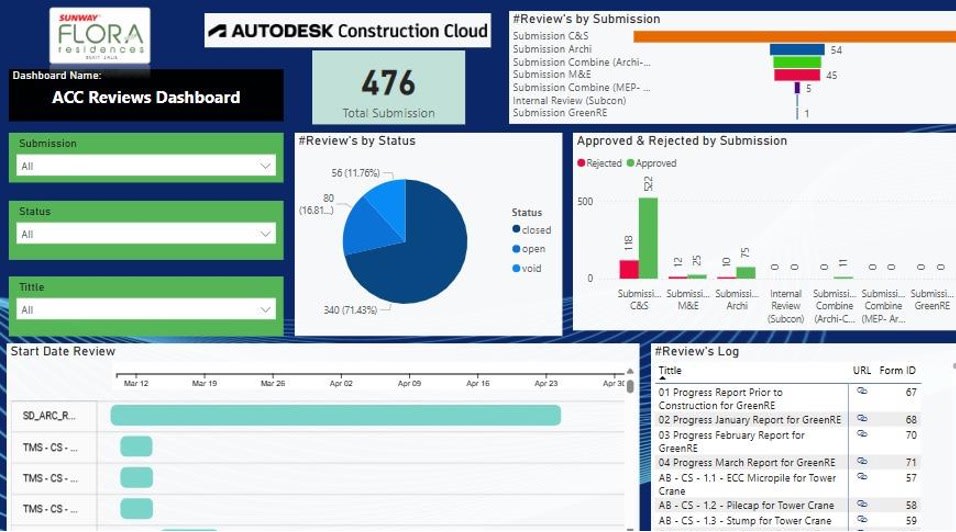
Autodesk Construction Cloud™ transforms Sunway’s document workflows to eliminate chaos, cut delays, and boost accountability across teams
The adoption of ACC gave Sunway Construction a strong, cloud-based foundation to tackle its previous challenges. ACC served as a true common data environment (CDE), centralising document management, version control, and secure collaboration. By digitising previously manual processes, the team achieved a 42% improvement in productivity when performing digital reviews annually per project. ACC also broke down silos across teams, encouraging greater interaction, communication, and knowledge sharing—while generating valuable data for current and future projects.
Searchability and access to information saw one of the most significant improvements. “If this project had been managed using traditional methods, I’d spend a lot of time going through drawings, superimposing them, and manually verifying documentation,” said Siti. “What takes me 20 minutes now might have taken an hour before.”
Another major improvement has been the team’s drawings version comparison capabilities. With ACC, Sunway digitised and streamlined this entire workflow: all discipline drawings are now accessible in real-time through a centralised platform, allowing project members to easily compare and overlay plans. ACC’s automated versioning tools flagged conflicts instantly, enabling teams to address problems before they escalated on-site, helping to accelerate coordination and reduce rework, saving both time and cost on the Flora Residences project.
These time savings have also had a direct impact on the project’s bottom line. “We work on an extremely tight schedule. Every single day is worth around tens of thousands of ringgit, so even losing half a day can have a major financial impact,” Kamarudin points out. “If we’re idle or miss the opportunity to claim that time properly, it’s a loss we can’t afford.”
Another impactful shift was the move to concurrent document reviews. This streamlined the review cycle and made collaboration much more efficient. “When I send something for review, everyone involved gets notified at the same time. They can all comment simultaneously and even see each other’s feedback,” she added.
On average, around 11,000 documents are exchanged each year, totalling roughly 33,000 documents across the three-year Flora Residences project, which would have been overwhelming through manual processes. “With ACC, we have versioning, so we always know which document is the latest,” said Siti. “This eliminates outdated or superseded files.” That clarity helped reduce costly mistakes and gave teams confidence that they were always working from a single source of truth.
Perhaps most importantly, ACC introduced robust access controls and tracking features. “We can now see exactly who accessed a file, who moved it, and when,” Siti explained. “We have a clear audit trail, which was simply not possible with the old system.”
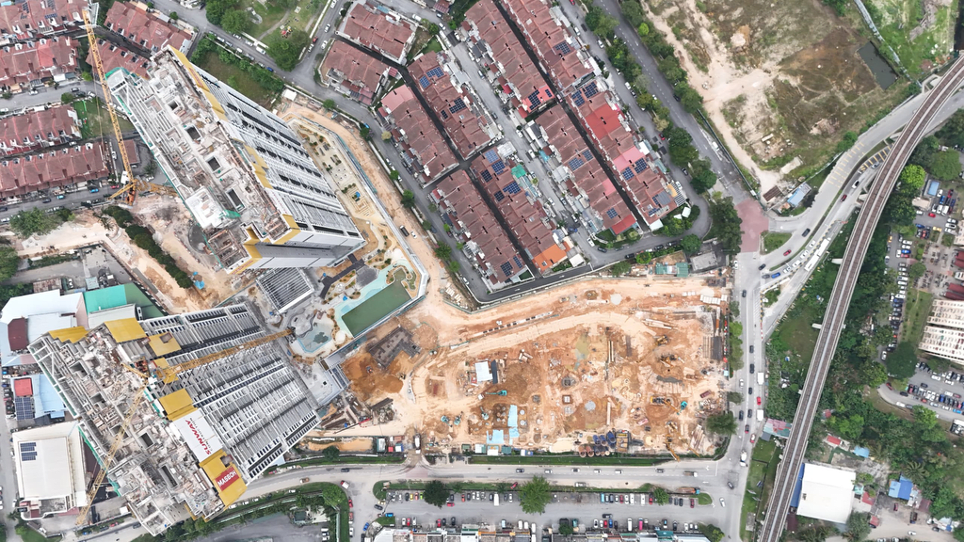
Building better with centralised document management
For Sunway Construction, adopting ACC marked a strategic shift towards smarter, more efficient project delivery for the Flora Residences project. Today, the platform is used enterprise-wide, supporting nearly 100 active projects across both their property development and contracting portfolios.
By streamlining document control, enabling real-time collaboration, and strengthening data integrity across all stakeholders, ACC has equipped Sunway with the tools to manage complex builds with greater precision, accountability, and speed.
As Sunway continues to set new benchmarks for construction excellence in Malaysia and beyond, digital solutions like ACC are helping to lay the foundation for the next 40 years to be just as impactful as the last.