How D&E Air Conditioning Improved Installation Efficiency with Autodesk Build Assets and Progress Tracking
Founded in 1989 with a handful of employees, D&E Air Conditioning (D&E) has grown into a powerhouse in the Australian HVAC industry with over 750 employees across seven branches.
D&E implemented Autodesk Construction Cloud to provide a single source of truth for project data with instant access to accurate information on-site. Site and office teams are now aligned, information is no longer lost, and installation quality and speed have improved.
Challenges with Fragmented and Manual Data Management
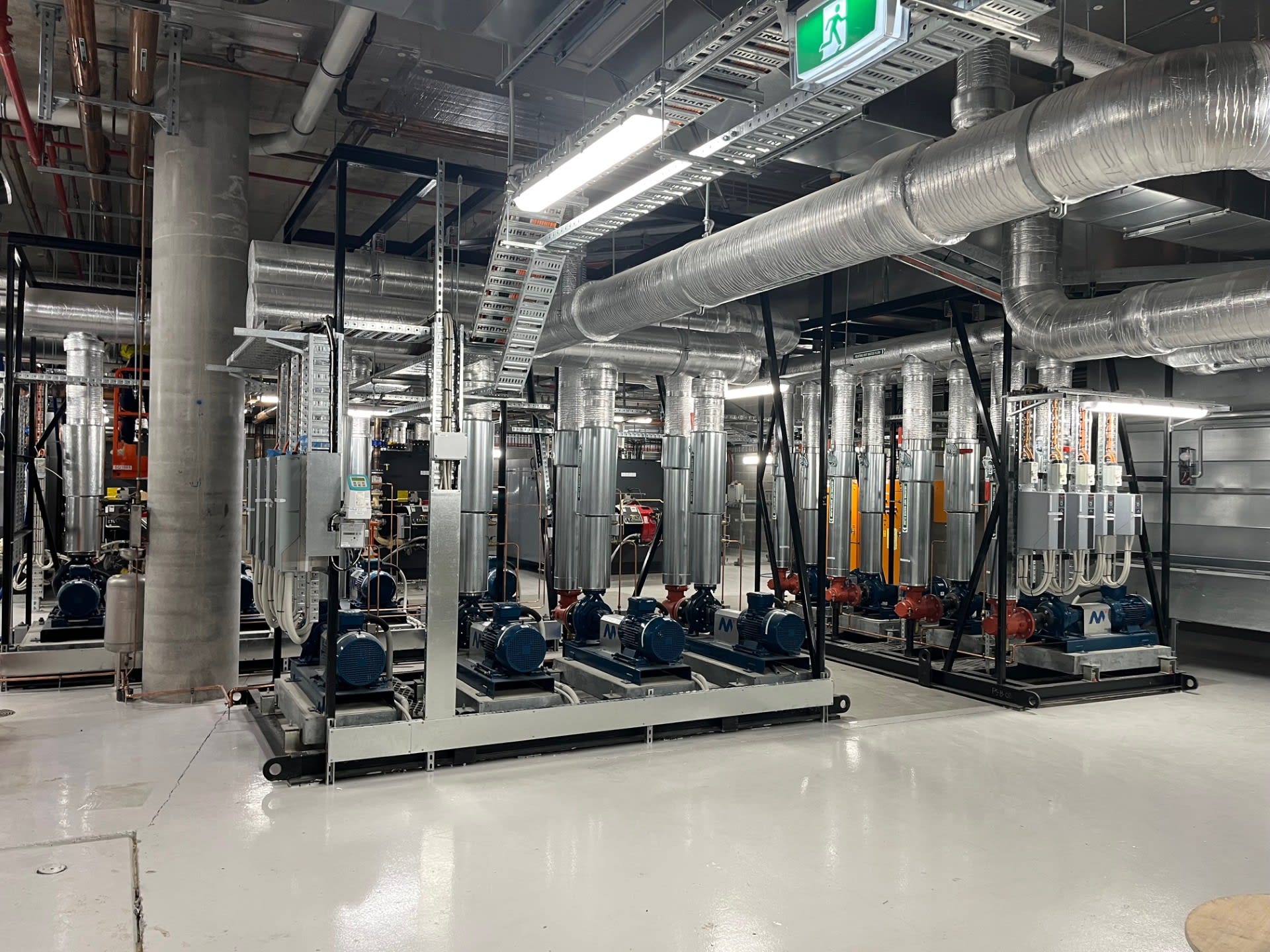
D&E faced productivity and data accuracy challenges due to siloed information management across multiple departments. Manual processes, which relied on traditional information sharing from office to site, caused significant delays. Because forms were spread across different systems, teams wasted time on tasks like accuracy checks, re-entering data into stakeholder-specific formats, and manually printing and distributing reports. This caused up to two hours a day of unproductive time per user, resulting in frustration and increasing the risk of data errors.
As D&E experienced rapid business growth, the transition from design to construction increased, driving a need to digitise processes to improve accuracy and productivity.
D&E’s National Digital Engineering and Drafting Manager, Nigel Skidmore, explained, “Our key goal in seeking a solution was to have everything on one platform, with a single data entry point, so all information was easily accessible from anywhere.”
A Digital Solution to Streamline Construction Workflows
Following an in-depth review and update of internal processes and workflows in 2022, D&E sought a solution to create a centralised hub, implement stringent document controls, and establish a robust common data environment (CDE) for easy access to reliable information from office and site environments.
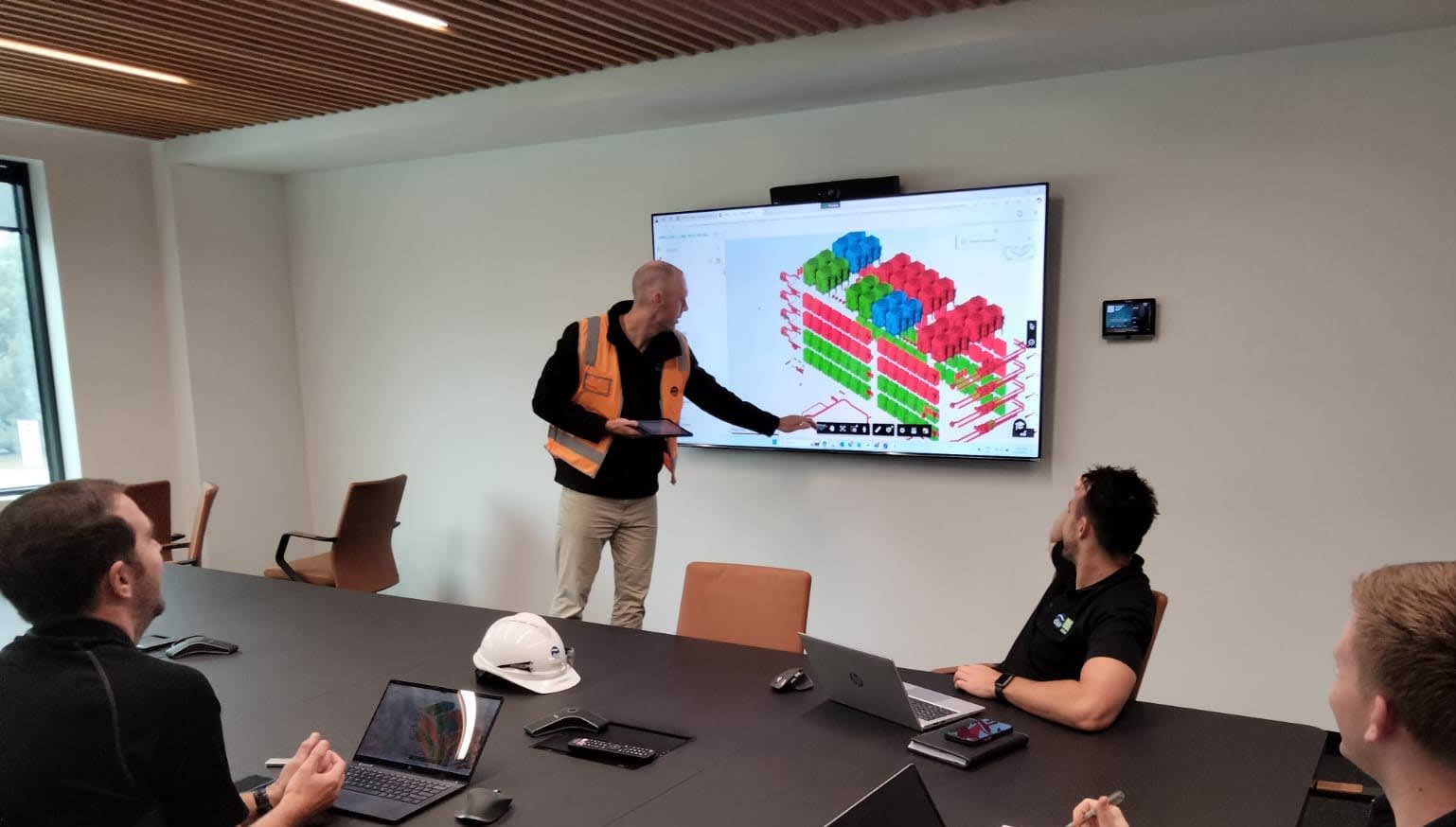
D&E conducted a thorough market evaluation to find a user-friendly, scalable solution aligned with its goals. Guided by Board strategy and insights from office and site staff, D&E chose Autodesk Construction Cloud. Users immediately saw the value in Autodesk Build, along with Progress Tracking features that let them mark up 2D sheets and track asset progress. These tools keep office teams informed while empowering field teams to forecast productivity and quickly adjust to scheduling changes.
Nigel explained, “We’ve always had asset and progress tracking, but Autodesk Construction Cloud allowed us to combine them with shop drawings, technical data, miscellaneous project documents, schedules, and procurement items. We immediately saw huge benefits for site teams reviewing PDF drawings to status the asset, jump to schedules, access technical data, fill out site forms, and complete commissioning data, all from one location without understanding a folder structure or accessing multiple locations and formats.”
While Autodesk Construction Cloud’s capabilities and open APIs were critical strengths, its promising future roadmap was also key. Teams were confident the platform’s evolution would meet D&E’s long-term needs, a belief reinforced by Autodesk’s consistent release of new features every two months, showcasing a commitment to ongoing innovation.
As an advocate of digital transformation across the design-to-construction process, Nigel understands the need for seamless transition from one phase to another. He has been the driving force behind the adoption of Autodesk Construction Cloud and digitising the entire design-to-construction process.
Nigel commented, “A key differentiator was Autodesk Construction Cloud’s ability to provide a comprehensive, ready-to-use solution. Unlike other options that relied on custom programming and piecing together multiple applications, Autodesk Construction Cloud reduced implementation complexity and eliminated the need for ongoing, resource-intensive maintenance, making it a sustainable and efficient choice.”

Organic Growth of Autodesk Construction Cloud across the Organisation and Continuous Improvement
After the initial pilot project, an enterprise license was approved, and Autodesk Construction Cloud is now used across 30+ projects in six offices and four states. Docs, Forms, Models for clash detection are all used extensively, with additional use of Issues, Assets, and Sheets.
To ensure successful adoption, the implementation followed a phased approach. This began with quick wins to resolve D&E’s legacy system problems, then gradually introducing new features, and rolling out to new projects as they were won to prevent overwhelming site teams. Ongoing training and support were also critical to the process.
Nigel continued, “Projects of this size and magnitude take a lot of effort and patience, so you need to be comfortable with your platform partner and people. A large percentage of success lies here.”
The adoption of Autodesk Construction Cloud has grown organically, through collaboration from project teams and continuous internal feedback, particularly site teams. Issues and feature requests are documented and shared with the Autodesk product team, creating a critical feedback loop that drives continuous improvement to meet user needs.
Accurate Information Instantly
In the initial rollout of Autodesk Build, even using only a few of its key features, D&E site managers reported increased efficiency in their daily tasks, attributed to swift and precise access to information.
For example, site managers can access cached information directly on their iPads to answer impromptu questions from site personnel, verify setouts, and confirm accuracy on the spot. This eliminates the 20-minute walk back to the site office to search for documents. Automated version control further streamlines this process, ensuring teams always work with the most current documents, and real-time update notifications eliminate the risk of outdated information causing errors.
Autodesk Construction Cloud is used by almost every department, and the goal of establishing a robust CDE is well underway. Site and commissioning teams use it for project-related activities, while project management and administration teams benefit from enhanced document control, planning, and communication. Engineering and drafting teams optimise design integration, coordination, and review/markup of workflows, and are gradually adopting the automatic data repository through the Assets portal. Meanwhile, contractors use Autodesk Construction Cloud for clash detection.
Recording all project elements in the Assets tool enables site teams to accurately track asset status, location, and installation progress, replacing manual estimations that led to discrepancies. For example, a project tracked as 75% complete when it was just a few percentage less could translate to thousands of labour hours and escalating project costs.
Although not initially planned, external team involvement grew organically, with many requesting access during projects. D&E shares its hub with 200+ companies, including clients, suppliers, trade partners, and subcontractors. This has proved advantageous for site teams, with subcontractors now accessing real-time information and drawings with less reliance on intermediaries.
Installation quality and speed have improved, as information is no longer lost between office and site teams. Builders and subcontractors collaborate more effectively, experiencing smoother integration into workflows and better project coordination. Autodesk Construction Cloud has increased transparency, helping teams plan and allocate labour more efficiently.
Meeting Industry Standards and Client Expectations
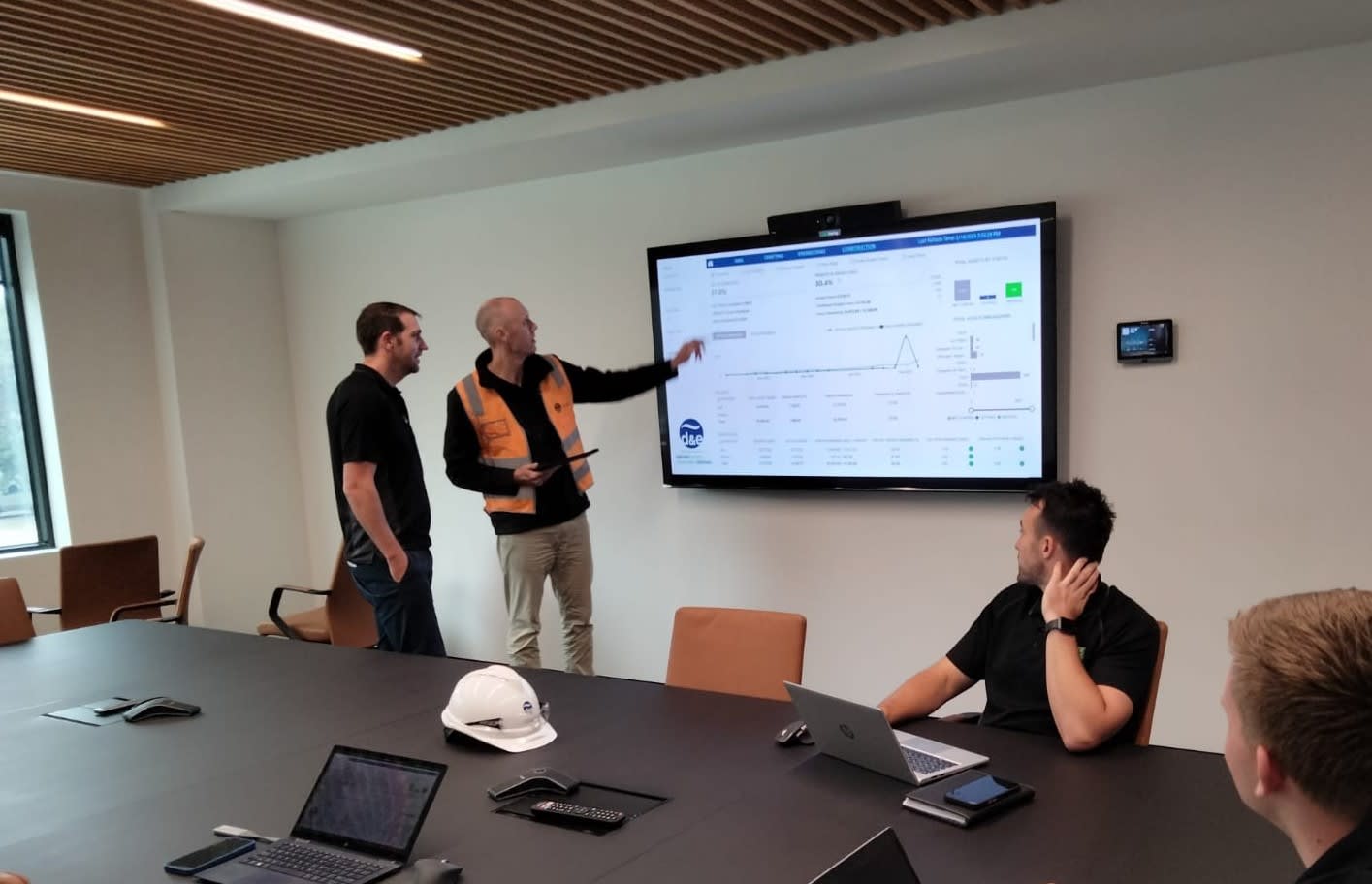
Dashboarding through Autodesk Construction Cloud means project insights are consolidated into a single platform, providing management with key metrics. For example, project tracking, asset installation, labour hours, drawing status, and clash detection for quality. Primary focus areas include quality assurance and project progress/status, with current exploration into safety metrics. Autodesk Construction Cloud lets D&E identify issues earlier in design phases, significantly reducing errors and improving outcomes.
While the initial implementation focused on internal efficiencies, D&E recognises the growing demand for integrated workflows across contractors and construction teams. As adoption of similar systems grows amongst stakeholders, opportunities to enhance collaboration, broaden networks, and streamline processes across the construction ecosystem increases.
Exploring Autodesk Construction Cloud’s Full Potential
D&E is exploring additional functionality and aims to integrate Autodesk Construction Cloud into all projects, replacing legacy document management systems to maintain consistency across all project phases without data re-entry. Ongoing sandbox projects provide a foundation for scaling this approach, with workflows, document sharing, and other functionalities trialled in low-risk environments.
Internal teams and partner builders are gaining confidence in Autodesk Construction Cloud through real-world road testing and a collaborative approach to refining processes and identifying strengths before transitioning to live projects.
Nigel concluded, “We see Autodesk Construction Cloud as the baseline platform, CDE, and sole project repository for our business across all departments, providing a consistent and accurate data set. We had high confidence that Autodesk Construction Cloud would improve quickly, and this has proved true. The support from Autodesk is also second to none – - whenever we have a question or feature request, they come back with a solution that we can’t wait to build into our business.”