Delivering certainty on nationally significant projects: how Tiong Seng builds digital discipline with Autodesk Forma
For more than six decades, Tiong Seng has helped shape Singapore’s built environment. Founded in 1959 and now one of the country’s best-known A1-graded contractors, the company has delivered residential, commercial and public infrastructure projects that form part of everyday life for Singaporeans. Along the way, it has built a reputation for technical excellence, treating digital delivery, BIM and process governance as core capabilities rather than add-ons.
That mindset is why Tiong Seng’s partnership with Autodesk stretches back nearly two decades. Today, Autodesk Forma (Formerly known as Autodesk Construction Cloud) sits at the centre of how the business coordinates teams, manages risk and delivers complex projects of national significance with confidence. For Tiong Seng, technology is not an experiment; it is a deliberate operating model designed to make delivery more predictable, transparent and efficient.
From disparate tools to a digital operating model
Tiong Seng’s digital journey began, like many contractors, with individual tools: Revit for authoring, Navisworks for coordination, spreadsheets for tracking issues and documents shared through email and messaging apps. The approach worked until projects grew larger and more multidisciplinary.
“As projects got bigger and more stakeholders came in, those manual methods started to show strain,” explains Ye Zaw Lin, Head of BIM & Construction Innovation at Tiong Seng. “We had issue logs in Excel, comments in WhatsApp, drawings in different folders. Our people spent too much time just finding the right information before they could do their jobs.”
The issue wasn’t team capability, but technological fragmentation. That realisation led Tiong Seng to adopt BIM360, and later migrate fully to Autodesk Forma to consolidate drawings, models, issues and workflows into a single common data environment. Instead of treating software as separate utilities, the company began treating Autodesk Forma as its digital operating system and saw significant time savings on administrative tasks like locating documents and managing revisions.
“Once everything lives in one place, documents, models, issues and approvals, you remove much of the noise,” Zaw Lin says. “Teams stop chasing information and double handling is greatly reduced, so everyone can start focusing on solving the real problems that our clients want help with.”
A single source of truth for every project
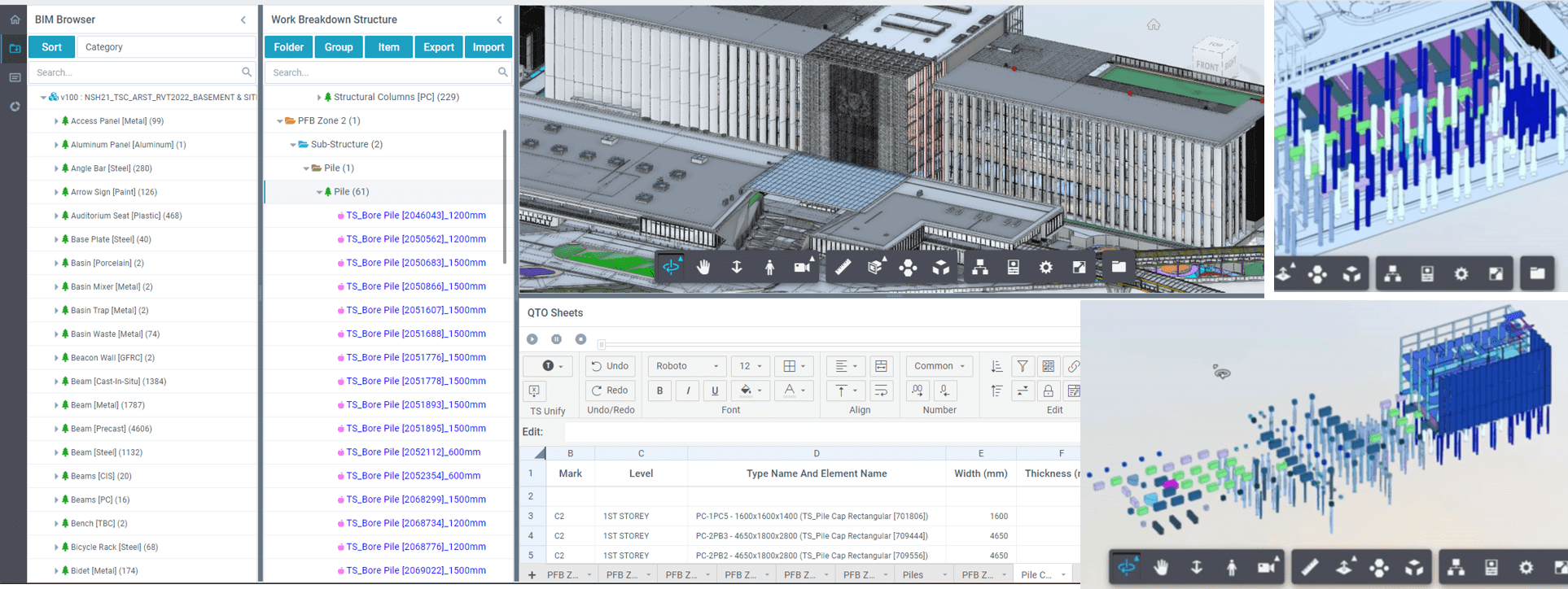
Today, Autodesk Forma supports Tiong Seng across the project lifecycle for work in Singapore. Autodesk Docs provides controlled document management and versioning, ensuring teams always work from the latest drawings. BIM Collaborate Pro enables cloud work-sharing and model coordination - meaning consultants and subcontractors collaborate on live models without manual file exchanges - while Build centralises field issues, inspections and tracking, creating a clear audit trail from design through construction.
Together, these workflows replace multiple disconnected systems with a single source of truth.
“We’ve reduced time spent on document searches or verifying versions by about 50 to 70%,” Zaw Lin notes. “That sounds simple, but it builds trust. People stop second-guessing whether they have the right file and can move faster with confidence.”
Clash detection and coordination that once required exports, reports and meetings now happen continuously in the cloud. Issues are logged directly against models, assigned and tracked to closure, giving both project teams and management real visibility.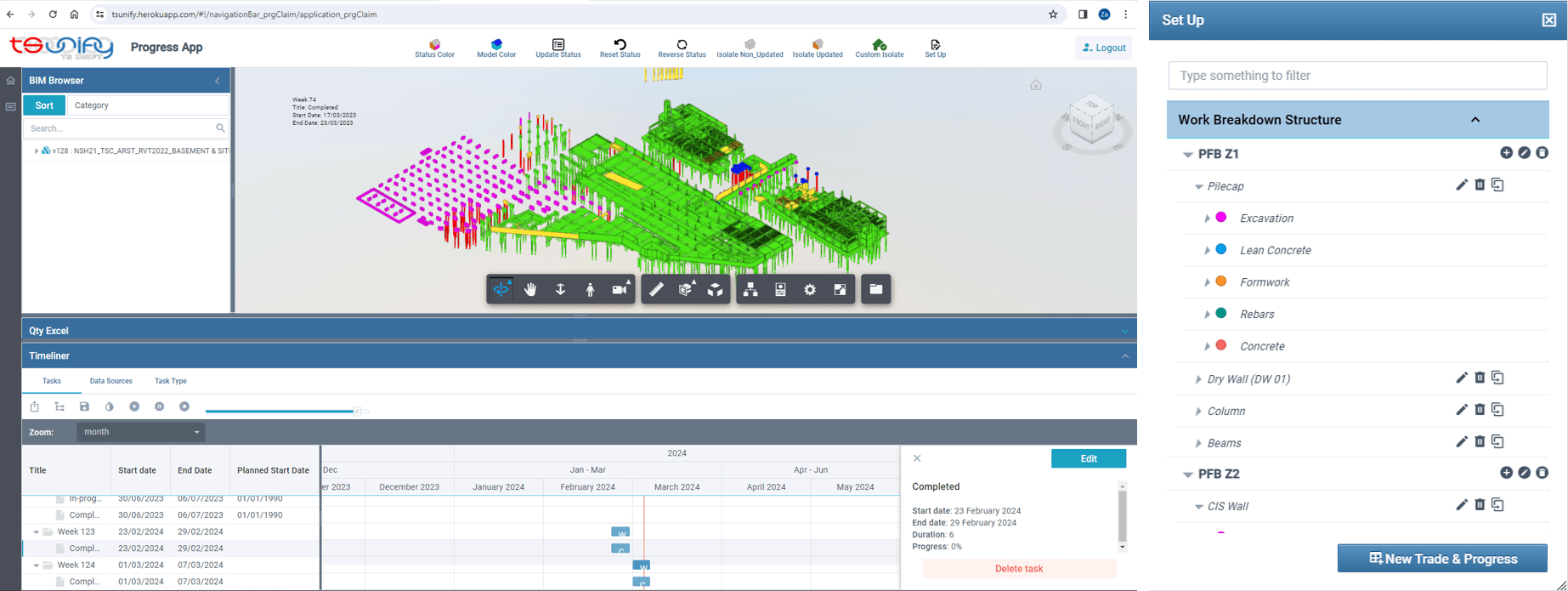
Setting a high standard
For Tiong Seng, the shift to Autodesk Forma wasn’t left just to enthusiastic team members, it was mandated and supported from the top.
“We don’t treat digital delivery as optional,” Zaw Lin says. “If you want consistency, leadership must set the standard. Consultants and subcontractors know that when they work with Tiong Seng, everyone works in the same environment and the standard is high.”
That clarity has helped the company avoid parallel systems and shadow spreadsheets. Autodesk Forma becomes the project’s home, not an additional layer - as Zaw Lin explains, “we tell teams: this is where the project lives and once everyone commits, the benefits multiply very quickly.”
Tiong Seng’s maturity also shows in how it extends the platform. The team has developed custom Revit plugins and uses Autodesk Platform Services to connect and extract data from Autodesk Forma, feeding internal tools such as TS Unify, a centralised environment aggregating project information for more insight.
“We don’t see Autodesk Forma as just software,” Zaw Lin explains. “It’s a foundation we can build on with APIs and integrations to make sure we tailor workflows and bring data together in ways that support better decisions across the business.”
That capability allows the company to move beyond coordination into analytics, identifying trends, benchmarking performance and continuously refining processes across projects, building on the substantial time savings already delivered across everyday activities like finding the right documents and drawings.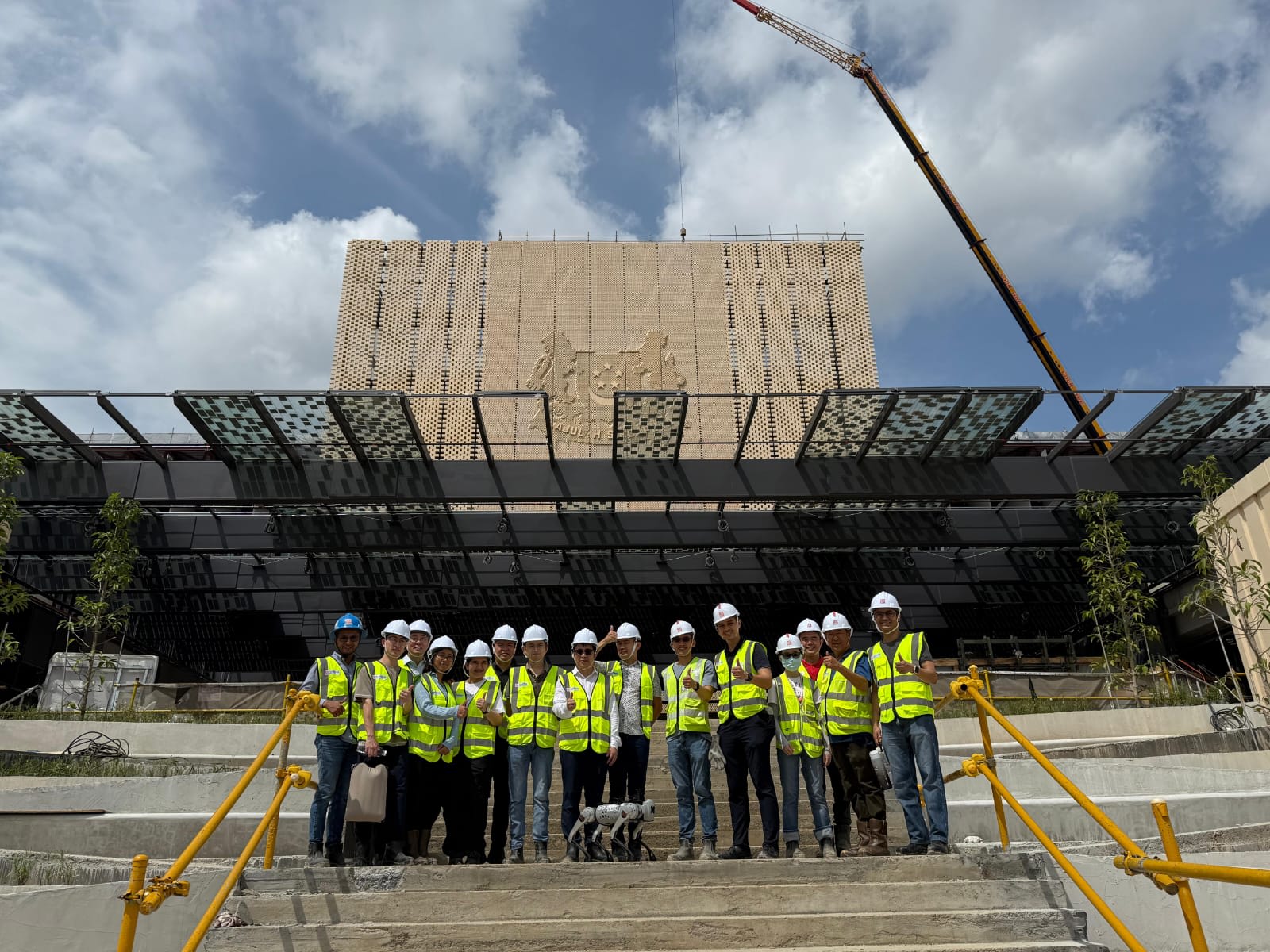
National projects with real-world stakes
The impact of that approach is most visible on large public-sector work where reliability and coordination matter most.
One example is the new Central Manpower Base (CMPB), Singapore’s one-stop hub for National Service administration, medical screening and enlistment activities. National Service is a defining part of Singaporean life and the facility plays a central role in that journey for thousands of families each year. Beyond its operational functions, the development includes public amenities like childcare, food and fitness facilities, making it both a civic and community space.
Delivering a project of this nationally significant scale meant coordinating multiple stakeholders and disciplines with little room for error. Autodesk Forma provided the backbone for documentation control, model coordination and issue tracking across teams, helping Tiong Seng maintain a single source of truth as designs evolved and delivery complexity increased.
That delivery discipline has also been recognised externally. The new CMPB was awarded the Building and Construction Authority’s Project of the Year Award (Institutional Category) 2025, with the project recognised for its commitment to industry transformation and the adoption of more productive, digitally enabled delivery practices.
“Awards are never the goal, but they’re a useful signal that the fundamentals are working,” Zaw Lin says. “When information is controlled, coordination is visible, and issues are closed with traceability, the project performs better. That’s when outcomes improve for the client and recognition tends to follow.”
The next 20 years
After nearly two decades working with Autodesk tools, Tiong Seng’s focus is less on the next feature and more on strengthening the system it has already built.
“Our goal is certainty and consistency,” Zaw Lin says. “By using Autodesk Forma for all our projects, we can apply the same standards, we can scale without losing control and give clients greater visibility into how their projects are performing.”
For Tiong Seng, Autodesk Forma isn’t just a collection of applications. It’s the digital backbone that supports how the firm plans, coordinates and delivers, quietly bringing order to complexity on projects that matter to Singapore’s daily life and national identity.